
What It Was#
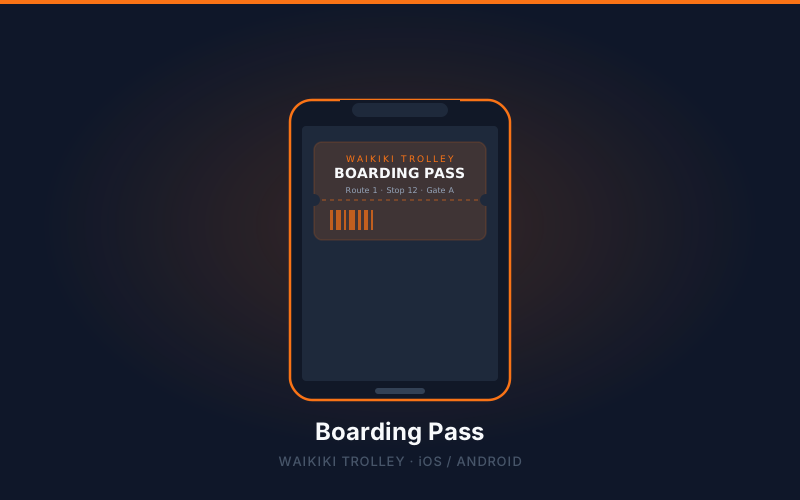
Boarding Pass was a hybrid ticketing system built for the Waikiki Trolley — Honolulu’s iconic open-air sightseeing service. The solution bridged a physical paper pass experience with digital validation, deliberately designed around the trolley’s customer base: predominantly elderly tourists who were technology-averse and expected a tangible ticket in hand.
The implementation has since been superseded, likely by a fully digital solution targeting a younger customer base.
How It Worked#
The system had three distinct layers working together:
1. Bulk barcode generation (back-end) The back-end system generated unique, route-specific boarding pass codes in bulk. Each code was valid for a specific trolley route and traceable through the system.
2. Print-ready document generation (mail-merge pipeline) Generated codes were piped through a document template — branded with Waikiki Trolley logos and formatted as a proper boarding pass layout — producing print-ready documents with each unique barcode rendered in place. This was effectively a mail-merge pipeline: the template stayed consistent, the barcode changed per pass.
The completed documents were sent to a local print shop for printing, cutting, and assembly into notepad format — a stack of boarding passes bound at the top, one per route. When a customer purchased a pass, the agent simply tore the top pass off the notepad and handed it over.
3. Hardware validation in the trolleys (Android + barcode reader) Each trolley was fitted with an Android tablet connected to an external barcode reader. When a passenger boarded, the operator scanned the paper pass barcode to validate it against the system — confirming the route and marking the pass as used.
Why Paper#
Waikiki Trolley made a deliberate choice to keep physical passes. Their ridership skews elderly — visitors to Honolulu who are comfortable with a tangible ticket but not necessarily with mobile wallets or QR codes on a phone screen. The paper notepad format was familiar, low-friction, and required no device on the customer’s end.
The digital validation layer at the trolley meant the passes were still trackable and tamper-resistant, despite being physical. It was the right balance for the customer at the time.
Stack: TypeScript / JavaScript, Docker, Android (barcode validation hardware), document generation / barcode rendering pipeline
Period: 2017–2020
Client: Waikiki Trolley