
What It Is#
Postman Prometheus is a fork of the original postman-prometheus tool, extended to support running multiple Postman collections continuously and exporting their combined results as Prometheus metrics.
The original tool ran a single collection and exported a snapshot. What I needed was the ability to monitor several API surfaces simultaneously, in real time — treating Postman collections as persistent health check loops rather than one-shot test runs.
What I Added#
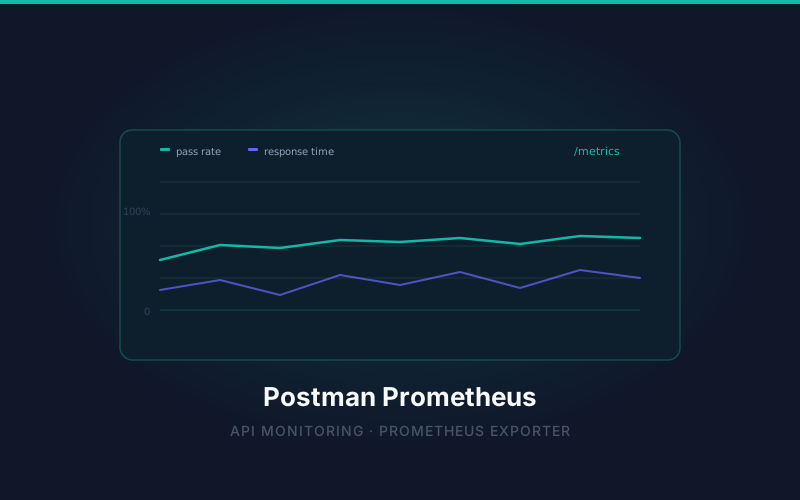
The key change over the upstream fork: support for multiple collections running concurrently, each on its own continuous loop, all feeding into a single Prometheus /metrics endpoint. This means you can point Prometheus at one exporter and get live pass/fail state, response times, and assertion results across your entire API surface at once.
- Multiple collections configured and running in parallel
- Continuous execution loop rather than single-shot runs
- Per-collection metrics namespacing so results don’t collide
- Single
/metricsendpoint aggregating everything for Prometheus scraping
Why I Needed It#
I had several independent API suites to monitor — different services, different teams’ collections — and wanted unified visibility in Grafana without running a separate exporter instance per collection. The upstream tool got me 80% there; extending it for multi-collection continuous operation got me the rest.
Status#
Active. Used in production monitoring pipelines.
Language: JavaScript (Node.js)
Upstream: postman-prometheus
Fork: github.com/rubyjedi/postman-prometheus